














In Malayalee communities - whether in Kerala or across the global diaspora - we take deep pride in our culture, heritage, and family values. We gather for festivals, honor our parents and elders, and work hard to build strong futures for our children. Our lives are filled with tradition, hospitality, and an unspoken commitment to care for our own.
Yet, behind this cultural richness, many in our families are quietly struggling. Mental health issues, depression, anxiety, alcohol and drug abuse, and even suicide are real and rising challenges, especially among our youth and young adults.
As a mental health nursing professional and a proud Malayalee myself, I want to say clearly and with compassion: we are not immune to these struggles. In fact, our silence may be making things worse.
The Hidden Pain Behind Strong Faces
Malayalee culture often celebrates strength, endurance, and self-sacrifice. We work hard. We rarely complain. And, we try to keep family problems private. But, this same mindset can sometimes make it difficult to admit when someone is struggling. Many suffer in silence - afraid of judgment, gossip, or burdening others.
Depression is not simply being “sad” or “lazy.” It is a real medical condition that affects people across all ages - children, adults, and elders. Addiction to alcohol or drugs is not just a moral failure; it is often a symptom of deeper emotional pain or untreated trauma.
Too often, the fear of "what others will say" keeps us from getting the help we need. But, caring for our mental well-being is not a weakness. It is wisdom. It is strength.
When Silence Becomes Harmful
Growing up Malayalee, many of us were taught to turn to prayer, hard work, or simply "push through" difficult feelings. And, while those values have their place, they are not enough when someone is in crisis.
Whether someone is facing anxiety, depression, grief, or addiction, they need support from trained professionals - therapists, doctors, counselors - not just advice to "be strong" or "think positive." Mental health care should be viewed the same way we view care for diabetes, heart disease, or any other health condition.
When we pretend that everything is fine, we isolate those who are hurting. When we open up, we create space for healing.
Parenting in a Changing World
Today’s Malayalee parents - especially those raising children in the diaspora - face unique challenges. We want to pass on our culture and values while helping our kids navigate a different world of independence, technology, and new pressures.
This means we must be emotionally present - not just physically present. Look for signs of distress:
Sudden changes in sleep or eating habits
Mood swings or irritability
Withdrawal from friends or family
Declining school performance
Talking about hopelessness or wanting to give up
We must normalize conversations about mental health at the dinner table, just as we do about grades, career choices, or family traditions. If your child or spouse says they are struggling, listen without judgment. Believe them. Act.
A good therapist is not a luxury. It is an essential part of holistic care. Seeking professional help is not a betrayal of our values - it is a way of honoring them.
Family: Our First Line of Support
In our culture, family is everything. Our strength lies in our bonds - whether through shared meals, group chats, or weekly phone calls with relatives all over the world. When one person in the family is struggling, the whole family should step in - not pull away.
Support can look like:
Driving someone to therapy
Offering a nonjudgmental space to talk
Helping a relative through recovery from addiction
Checking in on a quiet teen in the family
We must move from being silent bystanders to active supporters. We must let our loved ones know: you are not alone, and we will walk with you.
Community Spaces for Healing
Our community centers, cultural associations, and social gatherings are powerful tools - not just for celebrating Onam, Vishu, Eid, Easter or Christmas, but for creating awareness and care.
Imagine, if we used these spaces for:
Mental health workshops
Parenting seminars
Open forums on youth pressures or addiction
Conversations led by licensed Malayalee professionals
Let us encourage our cultural leaders, teachers, and community organizers to speak openly about emotional wellness. Let us equip youth mentors and volunteers with the tools to recognize when someone needs help.
No one should feel they have to suffer quietly just to protect their family’s image.
Holding Space for Pain and Hope
Our heritage is filled with stories of strength through struggle. Whether it is the resilience of our migrant workers, the sacrifices of our parents, or the quiet strength of our elders, we know what it means to endure.
But, we must make space for vulnerability, too. Being Malayalee should not mean hiding pain - it should mean coming together to heal.
If someone is depressed, anxious, or battling addiction, let us not say: "Try harder." Let us say: "We are here for you. Let us get through this together."
Moving Forward Together
We are blessed with a culture rich in love, laughter, and connection. But, it is not un-Malayalee to talk about therapy. It is not shameful to take medication. It is not a failure to admit you or your child needs help.
Science, support, and compassion can coexist with tradition, pride, and perseverance. When we bring these pieces together, we offer our families the full spectrum of healing.
So let us speak up. Let us reach out. Let us stay close.
No one in our Malayalee community should have to suffer in silence.
About the Author:
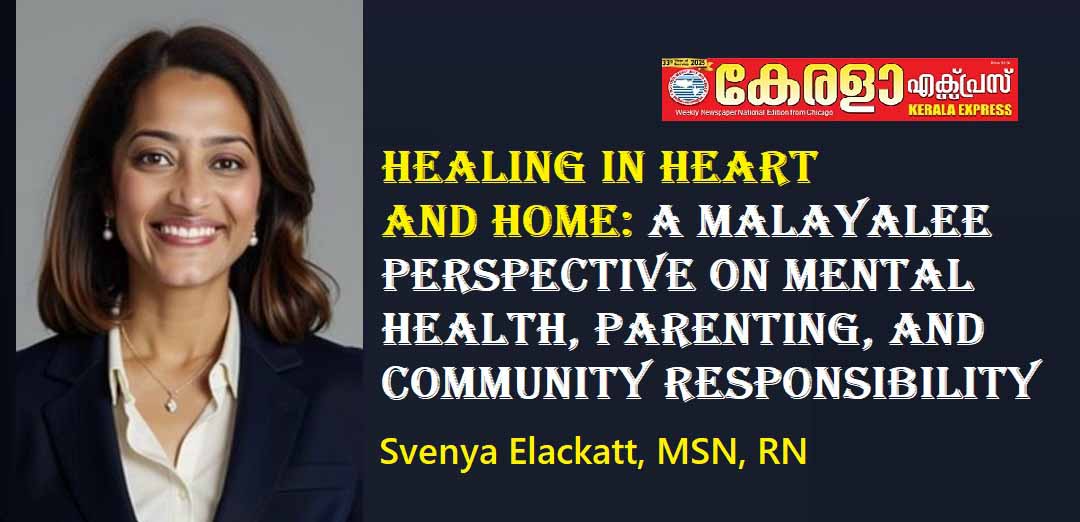
Svenya Elackatt, MSN, RN, is a mental health nursing professional and longtime advocate for culturally-informed care, prevention, and family-centered support. She lives in Houston, Texas, with her husband Philip and their twin children Noah and Hannah, and is part of the global Malayalee diaspora.

Svenya Elackatt, MSN, RN