
















It is quite disheartening, if not outright amusing, to witness the ongoing charade in Delhi at the AICC over candidate selection and the intense jockeying for favored nominees. The Congress party had five full years to prepare for these elections. Yet, even after the election date has been announced, the party is still struggling to finalize the candidate list.
As things stand, the UDF appears to retain an edge in the upcoming elections not because of any extraordinary effort by its leadership, but largely due to growing public fatigue with the governance of the Pinarayi administration. However, the current infighting and public discord once again expose the party’s persistent weakness: the inability to rise above individual agendas and personal interests.
I have previously emphasized the importance of introducing new candidates, particularly those not rooted in a given constituency, well in advance, so they can meaningfully engage with local voters and understand regional dynamics. At this late stage, with barely three weeks left in the campaign, such preparation is simply impossible. This is, frankly, a sad reflection of the party’s organizational state.
It is becoming increasingly evident that sections of the leadership are more focused on securing tickets for their close associates and allies than on identifying candidates with strong credentials and a genuine chance of winning. Such an approach risks serious electoral setbacks. The priority should have been strengthening the party and its organizational machinery, not advancing individual ambitions, including those tied to the contest for the Chief Minister’s post.
The party may also be failing to select candidates who embody integrity, competence, and a deep commitment to the party’s principles. There was an opportunity to look beyond the usual circles and bring in capable individuals from academia and other professional fields; people who could contribute experience, credibility, and fresh energy to the party. That opportunity appears to have been largely overlooked.
Equally troubling is the rise of opportunistic entrants who lack firm convictions and shift allegiances for personal gain. There are credible accounts of individuals negotiating with one party and, upon failing to secure favorable terms, switching to another. It is deeply unfair that such individuals are rewarded, while long-standing party workers, many of whom have dedicated decades of service, are sidelined. A reasonable expectation would be that any crossover politician should serve the party for a minimum period, perhaps five years, before being considered for a ticket. Organizational discipline and commitment must be non-negotiable.
Amid all this internal discord, developments like the SIR process (Special Intensive Revisions of Electoral Rolls) may be quietly reshaping the electoral landscape in Kerala. During my visit in January, I personally received a notice requiring me to appear at the village office or risk removal from the voter rolls. When I questioned this after having voted in the last three consecutive elections, I was told that the verification was being conducted based on the 2002 voter rolls. If such practices are widespread, many legitimate voters could be excluded, potentially creating serious challenges, particularly for UDF candidates in regions like Central Travancore.
Another concerning trend is the apparent convergence of interests between the CPM and the BJP on several fronts. The early announcement of the election date, coupled with the CPM’s immediate campaign readiness, stands in stark contrast to the Congress party’s continued disarray. In the last parliamentary elections, the BJP led in multiple assembly segments. Any tacit understanding between the CPM and BJP to field weaker candidates in select constituencies, thereby facilitating each other’s victories, should be a matter of serious concern.
There have also been allegations of EVM-related irregularities in past elections in certain regions of the country. One hopes that Kerala will remain free from such controversies and that the integrity of the electoral process will be fully upheld. The party must remain vigilant in this regard.
At this critical juncture, one can only hope that the candidate list is finalized without further delay and that the party unites, setting aside internal divisions, to present a cohesive and credible challenge. Unity, discipline, and a renewed commitment to core principles are essential if the goal is to decisively defeat the incumbent and corrupt Pinarayi government.
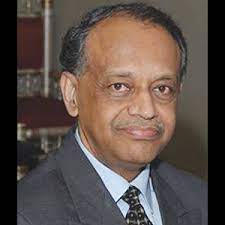
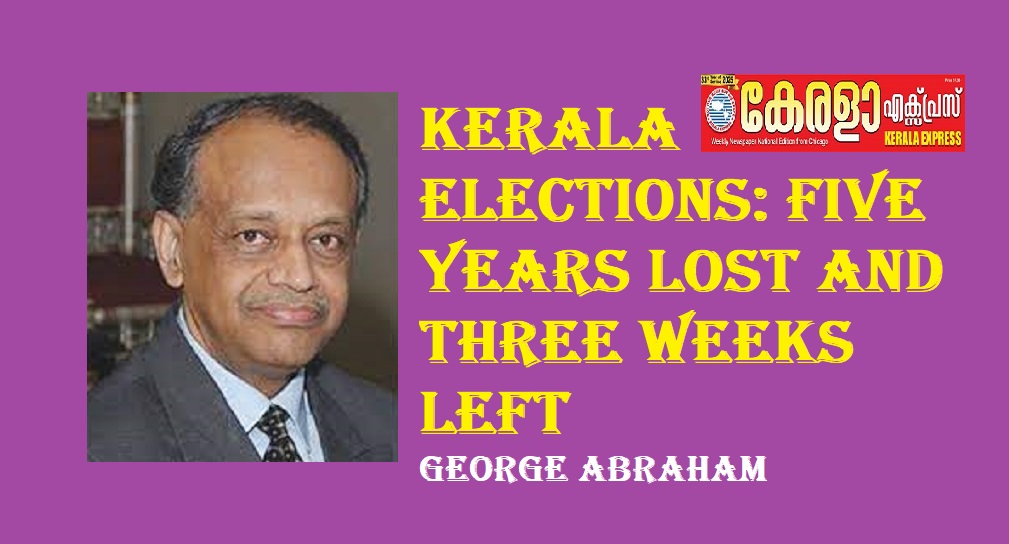
George Abraham